Ultrasound
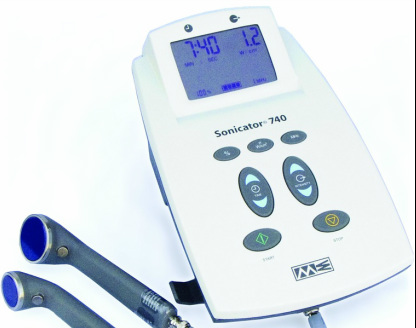
Ultrasound therapy is a commonly used modality in physiotherapy that employs high-frequency sound waves to support tissue healing and reduce pain. These sound waves are delivered through a handheld transducer placed on the skin with a conductive gel, allowing the energy to pass into the underlying tissues. Ultrasound can produce both thermal (heating) and non-thermal effects, depending on the settings used and the stage of injury being treated.
One of the primary uses of ultrasound therapy in physiotherapy is to promote tissue repair. The non-thermal effects, such as acoustic streaming and cavitation, are believed to help stimulate cellular activity, which may support the healing of soft tissues like muscles, tendons, and ligaments. For this reason, ultrasound is often used in the management of conditions such as tendon injuries, muscle strains, and ligament sprains, particularly during the early stages of recovery.
Ultrasound therapy may also be used to help reduce pain and muscle tightness. When thermal effects are applied, the gentle heating of deeper tissues can improve blood flow, increase tissue flexibility, and reduce muscle spasm. This can make it easier and more comfortable for patients to participate in exercises or manual therapy. As with other electro-physical agents, ultrasound therapy is typically used as part of a comprehensive physiotherapy program, combined with active rehabilitation strategies tailored to the individual’s condition and goals.
Ultrasound functions to speed up tissue healing, decrease swelling, decrease pain, and increase tissue extensibility. It does this through mechanical and thermal (heating) mechanisms.
Mechanical: these benefits arise due to two separate phenomenon
Cavitiation:
occurs due to pressure changes, gas bubbles oscillate (compress with peak of wave & expand with valley)
Acoustic (Micro) Streaming:
one directional motion of fluid caused by sound wave
Mechanical Benefits include:
Thermal: (same as superficial heating but deeper)
One of the primary uses of ultrasound therapy in physiotherapy is to promote tissue repair. The non-thermal effects, such as acoustic streaming and cavitation, are believed to help stimulate cellular activity, which may support the healing of soft tissues like muscles, tendons, and ligaments. For this reason, ultrasound is often used in the management of conditions such as tendon injuries, muscle strains, and ligament sprains, particularly during the early stages of recovery.
Ultrasound therapy may also be used to help reduce pain and muscle tightness. When thermal effects are applied, the gentle heating of deeper tissues can improve blood flow, increase tissue flexibility, and reduce muscle spasm. This can make it easier and more comfortable for patients to participate in exercises or manual therapy. As with other electro-physical agents, ultrasound therapy is typically used as part of a comprehensive physiotherapy program, combined with active rehabilitation strategies tailored to the individual’s condition and goals.
Ultrasound functions to speed up tissue healing, decrease swelling, decrease pain, and increase tissue extensibility. It does this through mechanical and thermal (heating) mechanisms.
Mechanical: these benefits arise due to two separate phenomenon
Cavitiation:
occurs due to pressure changes, gas bubbles oscillate (compress with peak of wave & expand with valley)
Acoustic (Micro) Streaming:
one directional motion of fluid caused by sound wave
Mechanical Benefits include:
- improves cell membrane permeability (opens protein channels for exit and calcium channels to enter
- increases macrophage activity
- causes stronger more elastic connective tissue
- increases cytokines
- increases blood flow
- increases fibroblast activity
- reduces edema formation
- can also help drive topical medicine into the tissues
Thermal: (same as superficial heating but deeper)
- increases nerve conduction velocity
- increases extensibility of collagen based structures
- increases blood flow
- enhanced adhesion of leukocytes
- increased bradykinin
- increased metabolic activity
- reduces spasm
- increases venous & lymphatic return
- increases oxygen dissociation off hemoglobin
- improves strength & function of collagen tissue
- reduces pain: decreases mechanical pressure, reduces spasm (decreased firing of gamma & alpha motor neurons), decreased ischemia